Robots That Build Themselves? They Teach About Smart Digital Design

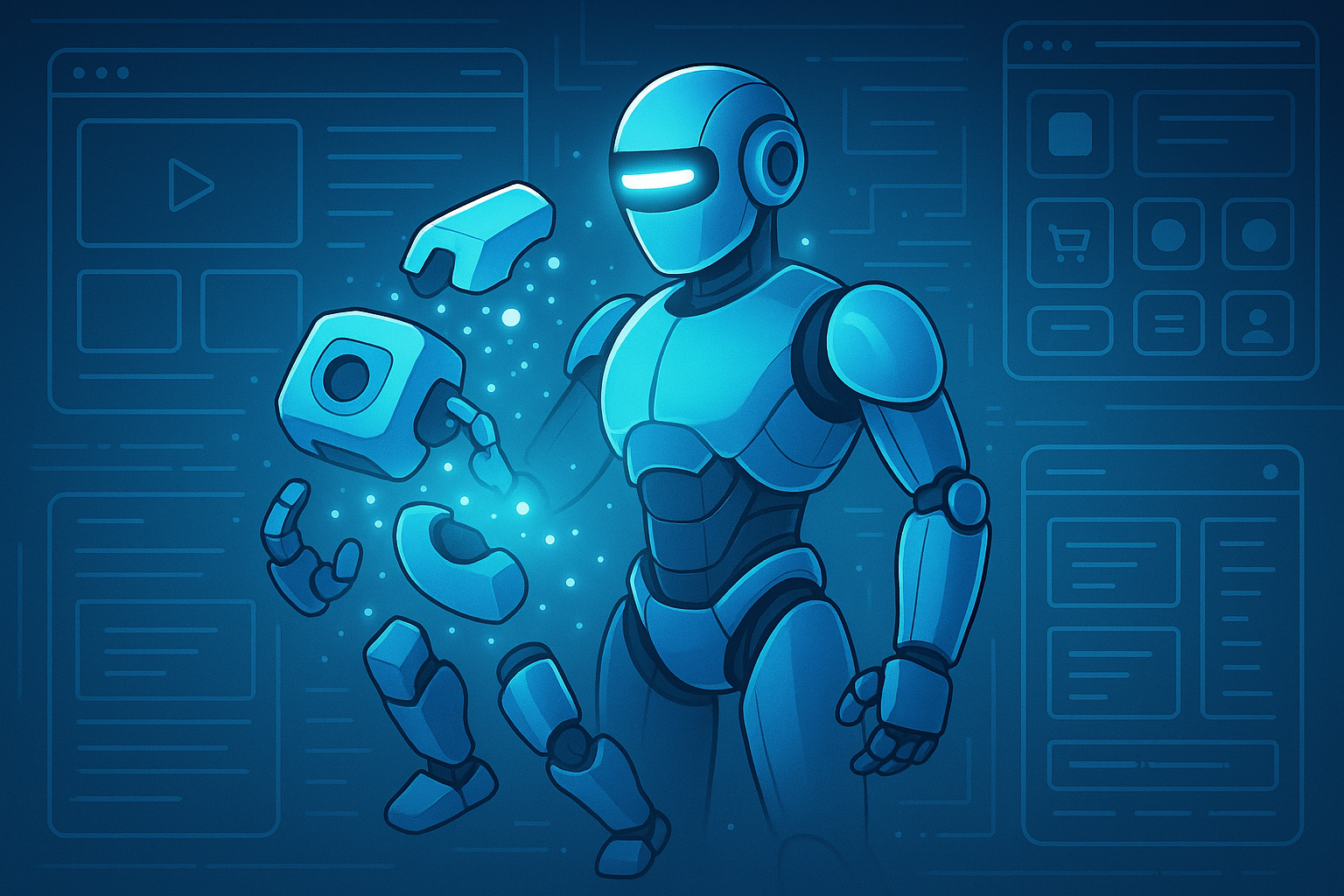
Imagine a robot that, in order to grow, incorporates parts from other robots. Sounds like science fiction? It’s already a reality. A team of scientists at Northwestern University, USA, recently developed a system of modular robots capable of reconfiguring themselves — including the ability to “absorb” other modules to adapt to different tasks.
But what does that have to do with your website, online store, or digital presence?
More than you might think.
The Age of Modular and Adaptive Design
The concept behind these robots is modular design: each part serves a specific function, and the system grows or changes based on current needs.
That’s exactly what we aim for when building smart digital platforms:
Websites that adapt to user behavior.
Online stores that add new features without having to start from scratch.
Applications that grow with your business — not against it.
What Is Modular Digital Design in Practice?
In practice, adopting modular design means:
Separating features into independent blocks, like Lego components;
Allowing new features to be added without breaking what already exists;
Making maintenance, continuous improvement, and A/B testing easier;
Making your website faster and lighter by loading only what’s needed.
For example:
Your contact form is one module.
The product showcase is another.
The support chat can be a module that only appears when the user interacts.
What Can We Learn from Autonomous Robots?
These robots reveal three key lessons for the digital world:
Adapt or fall behind Your digital presence should be able to grow alongside your business — with agility and without massive rework.
Less coupling, more freedom Independent modules are easier to maintain, upgrade, and replace. A rigid website stifles innovation.
Automate growth intelligently Robots reconfigure based on goals. Your website can do the same with data: adapting product displays, menus, and offers based on visitor behavior.
How Can You Apply This to Your Project?
At BytesHouse, we use this modular mindset to build scalable websites and apps, with clean design and reusable components. The result?
Better performance.
Long-term cost savings.
Flexibility to grow without headaches.
Whether it's a corporate website, an e-commerce platform, or an internal dashboard, thinking like a robot might be your greatest advantage.